
Providing comfort to the government on the revenue front amid fiscal stress, direct tax collection is moving closer to the revised Budget target for 2021-21 and may get a further thrust from the last instalment of the advance tax payment, the deadline for which ended on Monday. The contraction in net direct tax collection narrowed to 5 per cent year-on-year as on March 15 compared to a 9 per cent decline seen in January. In absolute terms, net collection stood at Rs 8.2 trillion against Rs 8.67 trillion in the same period last year, according to the provisional numbers shared by a government official.
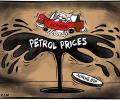
Many states are open to the idea of petrol and diesel being brought under the goods and services tax (GST) regime - contrary to the perception that they are averse to it - but they want a concrete proposal, including a compensation mechanism, from the Centre. West Bengal Finance Minister Amit Mitra says while the issue can be discussed, the Centre may not be keen to bring the change because it earns "much more" from taxes on petrol and diesel. "(The peak rate of) GST is 28 per cent. Under the regime, the Centre would only get 14 per cent. "So, definitely, the Union government does not want GST on fuel. It is all lies. Currently, they are in a very cozy place," Mitra said.
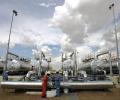
During a series of hectic talks between Cairn Energy and the Indian government over the $1.2-billion arbitration award in favour of the former last week, a slew of options was proposed by the two sides, including computation of capital gains and participation in the Vivad se Vishwas (VsV) dispute resolution scheme. The government is likely to go ahead and appeal against the arbitration award by a Permanent Court of Arbitration at The Hague before March 21, indicated finance ministry officials. Cairn Energy Plc on Sunday said it was hopeful that an acceptable solution to its tax dispute with the Indian government could be found to avoid prolonging and exacerbating the 'negative issue' for all parties.

The number of centrally sponsored schemes have increased to 35 in FY22 from 30 in FY21 and central sector schemes have increased to 704 from 685 in the previous year, reports Dilasha Seth.

The Budget proposed abolishing the under-performing, authority of advance ruling, to replace it with a two-member board of advance ruling.

'It is just an excuse to say that the Centre has run out of money.' 'Pruning these schemes would mean hard time for the people of India.'

While the tax-to-GDP ratio of 9.88 per cent has been assumed for FY21, the same as last year, when it touched a decadal low, for FY22 a ratio of 10.7 per cent has been assumed, an average of the last five years.

'However, this time it looks like that is not working.'

The robust revenue collection reinforces hope of a good economic performance in the third quarter of financial year 2020-21 after the surprising pickup seen in Q2.

While the declarations under the scheme have to be filed by December 31, 2020, the government had in October extended the deadline for making payment by three months till March 31, 2021, in view of the ongoing Covid-19 pandemic.

Personal income tax saw contraction shrink to 13 per cent by November from 22 per cent seen up to September, on the back of lower issuance of refunds and improvement in economic conditions.

Outlay for infra is also expected to see a significant increase in view of the government's Rs 111-trillion investment plan under the national infrastructure pipeline to develop social and economic infrastructure over five years.

'It is entering growth territory on a month-on-month basis.'

The government, under the Finance Act, 2020, had allowed tax exemption for SWFs and pension funds in the case of incomes from investment in 34 key infrastructure sectors, including hotels, cold chains, educational institutions, hospitals, and gas pipelines.

Thomas Isaac has been in and out of the national news in his role as Kerala's finance minister since 2018 for various path-breaking tax initiatives. But it is 2020 that he has become more prominent, principally in the GST council.

When the Centre tries to encroach upon the subjects that are under the prerogative of the state, or where the centre tries to evade from any responsibility guaranteed to a state through a constitutional provision/obligation, it poses a threat to federalism.

Dissenting states including Chhattisgarh and Kerala, have made it clear they are in no mood to relent. They want the Centre to borrow the entire Rs 2.35 trillion this fiscal citing bleak fiscal position.

Exports to China saw sustained double-digit growth for the fourth straight month in August, led by eightfold rise in iron and steel shipments.

Any additions in demand made by a tax officer under the faceless assessment process for over Rs 5 lakh of income will undergo a rigorous review process before a final demand order is passed.

This may leave those not opting for any of the two options offered by the Centre before the GST Council meet scheduled for October 5 in the lurch. It is clear from the present situation that these states will have to wait till June 2022 to get their compensation, subject to the council extending the cess collection period beyond June 30, 2022.
